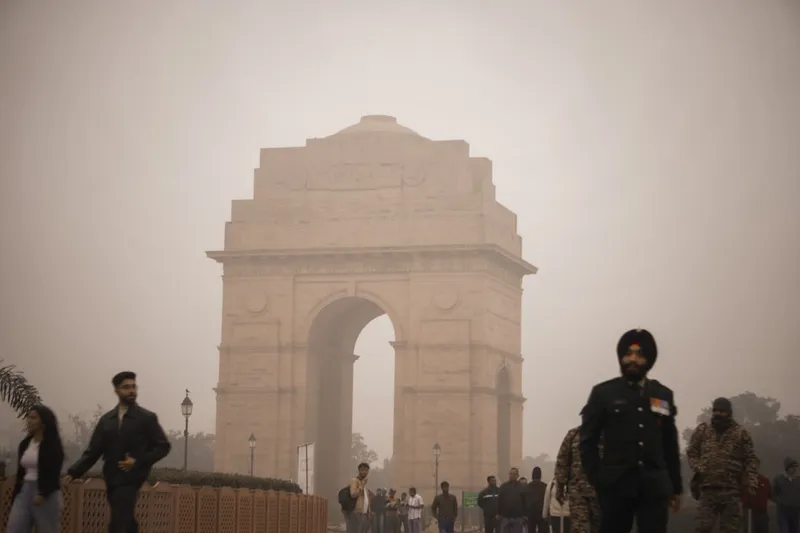








Imagine the sun setting, and you expect the air to finally cool down, but it just doesn’t. This experience is increasingly common across India, and it is more than just an inconvenience. Rising nighttime temperatures are quietly reshaping public health, creating significant challenges for our bodies to recover from the day’s heat. This silent shift is a critical component of climate change health impacts in India, and understanding these warming nights is the first step to protecting ourselves and our communities.
We often talk about scorching daytime heatwaves, and rightly so. They hit headlines, they disrupt daily life, and they pose immediate dangers. However, what happens when the night offers no respite? When the mercury stubbornly stays high long after sunset, it impacts our health in ways many might not immediately connect to the temperature outside. The World Health Organization (WHO) and the Indian Council of Medical Research (ICMR) both acknowledge that sustained heat, especially at night, poses a growing public health challenge, particularly for vulnerable populations.
Key Takeaways
- Nighttime temperatures in India are rising faster than daytime temperatures, disrupting the body’s natural cooling process.
- This persistent warmth leads to increased cardiovascular strain, poor sleep quality, and can worsen chronic health conditions.
- Warmer nights also extend the breeding seasons for disease-carrying mosquitoes, increasing the risk of vector-borne illnesses.
- Both individual actions, like cooling strategies before bed, and policy changes, such as urban greening, are essential for adaptation.
Understanding the Silent Shift
Our bodies rely on cooler nighttime hours to hit the reset button. This is when our core temperature drops, our cardiovascular system gets a break, and we enter restorative sleep. When nights stay hot, this vital recovery process gets disrupted. This disruption leads to a cascade of health issues. From a systemic perspective, the hardest part of managing this is that the effects are often subtle and cumulative, making them difficult to attribute directly to nighttime heat without careful surveillance.
Researchers and public health experts are increasingly focusing on this phenomenon. It is a silent stressor impacting millions, particularly in vulnerable populations. Therefore, recognizing the importance of cool nights for physiological recovery is fundamental to addressing this emerging health crisis.
Tracking the Trend: What the Data Reveals
Scientists are not just guessing about this; they are tracking the data. Across India, meteorological departments have been recording a clear trend: minimum nighttime temperatures are rising faster than daytime maximums in many regions. For instance, the Ministry of Earth Sciences’ (MoES) “Assessment of Climate Change over the Indian Region” (2020) highlighted that India’s mean temperature has risen by approximately 0.7 °C during 1901–2018, with a notable increase in warm nights.
Studies have looked at everything from sleep patterns to hospital admissions during extended periods of high nighttime temperatures. Li et al., publishing in Nature Communications in 2023, highlighted how global warming is leading to disproportionately faster warming of nighttime temperatures compared to daytime in many land regions, including vast parts of Asia. Researchers in India, often working with institutions like the Indian Institute of Tropical Meteorology (IITM) and the Indian Council of Medical Research (ICMR), examine localized weather data alongside public health records. They track increased incidence of heat stress, cardiovascular events, and even mental health impacts in communities experiencing these warmer nights. It is about connecting the dots between the thermometer reading at 2 AM and the health outcomes we observe in the morning.
The Health Burden of Sleepless Heat
The evidence paints a concerning picture. When nights remain warm, our bodies struggle to dissipate heat, meaning we spend more time in a state of thermal stress. This is not just uncomfortable; it is a physiological burden. Yu et al., publishing in The Lancet Planetary Health in 2021, showed a clear link between higher nighttime temperatures and increased risk of mortality, especially from cardiovascular and respiratory causes, across various Asian countries, including India. The body’s inability to cool down properly overnight means the heart has to work harder, blood vessels remain dilated, and inflammatory responses can persist.
Disrupted Sleep and its Consequences
Warming nights profoundly impact sleep. Imagine trying to get deep, restorative sleep when you are constantly tossing and turning, sweating, and feeling restless. Poor sleep is not just about feeling tired the next day. It weakens your immune system, affects cognitive function, and can exacerbate chronic conditions like diabetes and hypertension. Research from institutions like the Public Health Foundation of India (PHFI) consistently points to how sustained heat, particularly at night, can disrupt sleep architecture, leading to long-term health consequences. It is a vicious cycle: warmer nights lead to poorer sleep, which in turn makes us less resilient to the next day’s heat, compounding the overall health risk.
Ripple Effects on Public Health
Beyond the direct physiological strain, there are other ripple effects. Warmer nights can extend the breeding seasons and geographic range of disease-carrying insects like mosquitoes. This potentially increases the burden of vector-borne diseases such as dengue and malaria. Moreover, the mental health aspect is significant. Persistent discomfort, sleep deprivation, and the anxiety of living in an increasingly hot world can take a significant toll, contributing to stress, irritability, and even more serious mental health challenges.
What You Can Keep in Mind
This is not just a distant scientific problem; it is something that can directly affect your well-being and the health of your family, especially if you live in India. Here are some strategies you can consider to navigate these warmer nights:
- Prioritize Cooling Before Bed: Even without air conditioning, try to lower your body temperature. A cool shower or bath before bed can make a big difference. Using damp towels on your pulse points (wrists, neck, ankles) can also help.
- Optimize Your Sleep Environment: Use light, breathable cotton bedding. If possible, open windows on opposite sides of your home to create a cross-breeze once outdoor temperatures drop. A fan, even if it is circulating warm