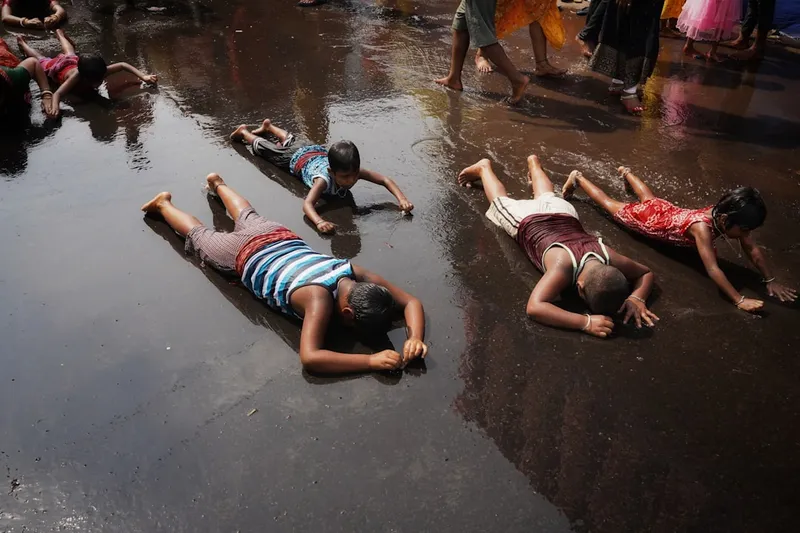







The surface temperature of a typical asphalt road in Delhi can exceed 50 degrees Celsius on a May afternoon. That is hot enough to cause severe contact burns. Because of the global El Nino climate pattern, atmospheric temperatures are rising across the entire Indian subcontinent. Furthermore, dense concrete construction in our cities traps this heat locally. The World Health Organization maintains that extreme heat is a leading cause of climate-related mortality globally. Therefore, the combination of el nino urban heat india represents a severe public health threat that requires immediate systemic intervention.
Key Takeaways
- El Nino events raise baseline atmospheric temperatures while urban concrete infrastructure traps the heat locally.
- The combination leads to prolonged, intense heatwaves that severely stress cardiovascular and respiratory systems.
- Cities equipped with structured Heat Action Plans demonstrate significantly lower mortality rates during extreme weather.
- Public health guidance prioritises consistent hydration, passive indoor cooling, and access to shaded spaces.
The mechanics of el nino urban heat india
What exactly creates this dangerous synergy? We must understand both components clearly. El Nino is a periodic warming of the central and eastern Pacific Ocean. This oceanic change disrupts normal global wind patterns. Consequently, it alters weather systems thousands of miles away. For the Indian subcontinent, it typically weakens the summer monsoon. Less rain means fewer clouds and more direct, punishing sunlight. Therefore, baseline temperatures rise sharply across the country.
Simultaneously, the urban heat island effect changes local microclimates. Concrete buildings and asphalt roads absorb solar radiation all day. They slowly release this stored thermal energy at night. Because cities generally lack adequate tree cover, natural cooling through evaporation decreases dramatically. The Indian Institute of Tropical Meteorology reports that nighttime temperatures in major metropolitan areas remain dangerously high. People cannot cool down properly while they sleep. Therefore, the physiological stress compounds day after day.
What the evidence actually says
Epidemiologists are actively quantifying this double burden. Shastri et al., publishing in Scientific Reports in 2017, analysed the intensity of heat islands in India. They found a clear link between dense urban development and severe local warming. Their sample included decades of meteorological data across diverse Indian cities. However, the impact is not uniform across all populations.
Furthermore, a study by Mohanty et al. in the Science of the Total Environment (2020) focused specifically on these urban microclimates during El Nino years. They mapped surface temperatures using satellite imagery. They discovered that highly built-up commercial areas were up to three degrees Celsius warmer than nearby rural zones. This temperature difference forces the human cardiovascular system to work significantly harder. In public health outreach across informal settlements in Maharashtra, I often see a massive disconnect between official weather station readings and the suffocating heat residents face inside poorly ventilated, tin-roofed homes. The official numbers routinely underestimate the brutal lived experience.
The World Health Organization consensus on this is absolutely clear. They state that prolonged heat exposure increases the risk of severe dehydration and cardiovascular collapse. Because the body constantly attempts to cool itself through sweating and increased blood flow to the skin, pre-existing medical conditions worsen rapidly. Therefore, the very young and the elderly face the highest mortality risks.
The toll on human physiology
We must look closely at how this heat damages the body. The human body regulates its internal temperature tightly. However, when ambient temperatures exceed skin temperature, the body relies entirely on sweat evaporation to cool down. Because high humidity often accompanies pre-monsoon heat in coastal Indian cities, sweat cannot evaporate efficiently. Consequently, the core body temperature rises dangerously.
This sustained thermal stress damages internal organs. The kidneys suffer from chronic dehydration. The heart pumps frantically to circulate blood. Therefore, heart attacks and renal failure spike during heatwaves. A study by Bhargava et al., publishing in the Indian Journal of Occupational and Environmental Medicine in 2018, evaluated outdoor workers. They documented a high prevalence of heat exhaustion among construction labourers. The sample size was large enough to confirm that occupational heat exposure is a massive, underreported crisis.
How cities fight back effectively
We do have strong evidence of what actually works to manage this threat. The National Disaster Management Authority recommends detailed Heat Action Plans for all vulnerable municipalities. Ahmedabad implemented the first such structured plan in South Asia in 2013. This proactive approach relied heavily on early warning systems and rigorous inter-agency coordination.
According to Knowlton et al., publishing in the International Journal of Environmental Research and Public Health in 2014, the Ahmedabad plan was highly effective. They estimated it avoided hundreds of heat-related deaths during subsequent severe heatwaves. The intervention included training local medical professionals to quickly recognise and treat heat illness. Furthermore, the city established public cooling centres across various neighbourhoods. Therefore, vulnerable populations had accessible, safe refuges during peak afternoon heat.
Because this model worked so well, many other Indian states eventually adopted similar frameworks. The Indian Council of Medical Research advises the continuous monitoring of heat-related hospital admissions during the peak summer months. Consequently, health systems can allocate resources more effectively and anticipate surges in patient volume.
Systemic and practical interventions
Systemic changes are necessary to cool our cities. The India Cooling Action Plan (2019) outlines strategies to reduce cooling demand. Planting native trees along streets provides crucial shade. Furthermore, preserving urban wetlands helps moderate local temperatures. These green and blue infrastructure projects are essential for long-term survival.
However, immediate practical actions matter immensely for individual safety. The Ministry of Health and Family Welfare issues specific, actionable guidance for heatwave survival every year. They recommend drinking water frequently, even if you do not feel thirsty. However, people should strictly avoid sugary drinks or alcohol, as these exacerbate dehydration. Furthermore, staying indoors during the peak afternoon hours significantly reduces dangerous sun exposure.
Because homes can trap heat, simple passive cooling techniques are highly valuable. Painting roofs with reflective white paint lowers indoor temperatures noticeably. Therefore, residents experience far less thermal stress without relying on expensive air conditioning. Opening windows during the cooler early morning hours flushes out trapped heat from the previous day. Consequently, the indoor environment becomes safer and more tolerable.
Communities can also organise strong local support systems. Checking on elderly neighbours ensures they have adequate drinking water and cross-ventilation. Identifying local cool spaces, like shaded temple courtyards or public libraries, provides critical safe zones. Therefore, collective community action directly mitigates the worst impacts of the heat.
We do not know the exact severity of future El Nino events. The long-term atmospheric projections remain somewhat uncertain. However, the rapid urban expansion and concrete densification in India is a documented, ongoing fact. The baseline heat will continue to rise.
A woman in a Delhi informal settlement once showed me her corrugated tin roof. It radiated heat like a literal oven long after the sun had set. She sat on the bare floor, continuously fanning her exhausted, sleeping child. That image stays with me constantly. The heat is not just a passing weather event. It is a brutal daily physical test.
This article is for educational purposes only and does not constitute medical advice, diagnosis, or treatment recommendations. Consult a qualified healthcare provider for any health concerns. See our Medical Disclaimer.
Sources
- Shastri, H., Barik, B., Ghosh, S., Venkataraman, C., & Sadavarte, P. (2017). Flip flop of day-night and summer-winter surface urban heat island intensity in India. Scientific Reports, 7, 40178. PMID: 28079148.
- Mohanty, M. P., & Simonovic, S. P. (2020). Understanding the effects of El Nino Southern Oscillation on urban heat island effect over Indian cities. Science of the Total Environment, 748, 141444. PMID: 32805561.
- Knowlton, K., Kakkad, K., Tiwari, A., Ghosh, A. K., Mavalankar, D., Naik, N. N., & Jaiswal, A. (2014). Development and implementation of South Asia’s first heat-health action plan in Ahmedabad, Gujarat, India. International Journal of Environmental Research and Public Health, 11(4), 3473-3492. PMID: 24675586.
- Bhargava, M., Bhargava, A., & Ghate, S. (2018). Occupational heat stress and health impacts on outdoor workers in India. Indian Journal of Occupational and Environmental Medicine, 22(1), 1-5. PMID: 29743756.
- National Disaster Management Authority. (2019). National Guidelines for Preparation of Action Plan – Prevention and Management of Heat Wave. Government of India.
- World Health Organization. (2018). Heat and Health. WHO Fact Sheets.